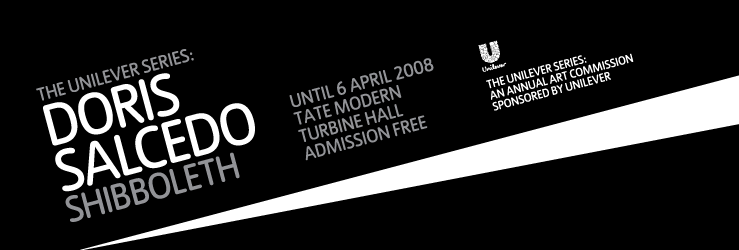
Cuando examinamos el patio
trasero de corporaciones como Unilever no podemos dejar de preguntarnos
con asombro. ¿Es ésta Unilever la misma Unilever que piensa
finaciar el proyecto de la Turbine Hall de la Tate hasta el 2012 con un
presupuesto de 2.1 millones de libras para esos próximos 5 años? Nos
preguntamos: ¿ Es ésta la misma Unilever que promociona no bodegones por
desgracia o paisajes bucólicos o “arte de derecha” sino Arte Político,
comprometido hasta el borde mismo del peligro, obras con serio contenido
crítico, rechazo a la exclusión y al racismo? ¿Es ésta la misma
Unilever que alienta al público a través de ese Laboratorio de Toma de
Conciencia que ha devenido después de una larga lucha el Museo, a
superar al abismo entre capitalismo y miseria?
Es inevitable desear que todo ésto no sea más que un delirio, el efecto de una noche de Rave londinense sin control y que en realidad existan 2 Unilever diferentes y opuestas y que eso que en principio parecia un nuevo acto heróico, una hazaña del Arte Social lo sea en verdad. Y que la hipótesis de Chantal Mouffe de que existe un “arte de izquierda” que no colabora con el sistema es tan cierta como que te caiga una tonelada de piso de granito sobre la cabeza.
Carlos Salazar
1. Promoting consumerism
Unilever spends a lot of energy and money on marketing and commercialisation of consumer products all over the world (‘Paint the World Yellow’ – the Lipton marketing campaign which provide everything with the Lipton Logo, from surfboards to Chevrolets—was a tremendous success, according to Unilever. It created a much bigger Lipton Logo awareness amongst consumers.) Since the Northern consumer market is saturated (so not much room left for expansion of market shares) Unilever aims at maximising the processing of food, which means adding value to ‘improve’ products and then charge more for these products. Unilever changes the product only slightly (e.g. strawberry toothpaste), or just changes the visual language in order to sell exactly the same product. Naturally this process involves heavy advertising. Many of the ‘improved’ products are basically useless, and there is no demand for them (the demand is being manufactured by the multinationals themselves). In short, Unilever tries to bring as many products as possible to the market without asking itself the question ‘is there a real need for the products we produce?’ Since the majority of people in the South still go hungry every day, there is much more room for growth in these countries. If the income of the poor rises, there is a big change they will spend the money on food products. Unilever is in a unique position to exploit this. They have expanded market share in the South, and in Central and Eastern Europe through heavy advertising and the introduction of new products. Products ‘from the west’ (like cigarettes, watches) are often very popular in the South, because of their supposed ‘high quality’ and because they can be associated with luxurious, western lifestyles (see also the paragraphs on ‘using consumerism to eradicate poverty’). Flooding the world with ever more (useless) products is a pretty immoral sales strategy. Only think of the ecological costs that come along with it (processing of products, packaging, waste processing, transport, etc. all involve high ecological costs). If people in the South start consuming the same amount of products and services as people in the North, the natural environment will definitely not survive. The only real and sustainable solution to environmental problems is less production and less consumption. Unilever and other multinationals are main actors being responsible for the ongoing trend in the opposite direction!! Besides, heavy advertising generates psychological effects like feelings of inadequacy, disorientation, mood disorders, and cynicism. In effect, advertising involves tremendous non-value added costs, in other words, a tremendous waste of resources. Back to top
2. Misleading marketing
Rebranding the same or slightly changed products for sale can legitimately be labeled misleading, likewise the introduction of new products that supposedly improve the daily lives of consumers (‘you will feel better starting the day with…’) or strengthen their self-image (‘you are worth it, aren’t you?’). The UK Advertising Standards Authority (ASA) has recently accused Unilever for false advertising. The ASA ruled that Unilever misled British consumers in the way the company presented the health benefits of its cholesterol-lowering margarine, Flora pro-activ. According to ASA, Unilever’s Van den Bergh Foods unit overstated the benefits of Flora pro-activ in one press advert that claimed it could reduce LDL cholesterol by 10 to 15 percent. After the ASA ruling, Unilever agreed to make the required changes and not advertise in the same way again [54. (Sanctions against advertisers who break codes of practice in Britain are ineffective. The ASA has no statutory powers. It can report persistent offenders to the Office of Fair Trading, but it is reluctant to use this deterrent (Monbiot, 2001) Back to top
3. Market domination
Multinational corporations evidently have tremendous market power. They can decide what products are to be manufactured, what crops are to be grown, and above all, they can dictate prices. Local businesses and jobs are destroyed along the way, because that is the law of the jungle. For example, take tea. Unilever is the world’s largest tea company, and owns 18,000 hectares of plantations in Kenya, Tanzania and India. It controls 20% of the market (most likely these 1999 figures have changed), through its ownership of the Brands Lipton’s and Brooke Bonds. Consequently, it has major power over the tea price. In the mid 80′s, when the Indian tea price started to rise, Unilever and other corporations acted to bring it down by temporarily boycotting Indian tea. When the Indian government tried to set a minimum export price, the multinationals collectively withdrew from the market, forcing the government to retreat, and slash the price.
Back to top
4. Procter&Gamble and Unilever reach agreement
While creating the image of tough competition, big corporations often cooperate in order to divide markets among themselves. Unilever and Procter&Gamble (P&G) have recently (6 September 2001) reached an agreement to settle all issues related to disclosure of competitive business information. Terms of the agreement were not disclosed (how surprising!). P&G chairman John E. Pepper said, ‘We believe the agreement protects both P&G’s and Unilever’s business interests.’ (what about the consumers’ interests?) Pepper continues: ‘This agreement (…) will not inhibit fair and vigorous competition in the marketplace’ [55. (with multinational corporations dominating the marketplace in many, if not all sectors of the economy, one cannot speak of ‘fair competition’). 5. Pushing the neoliberal agenda and spreading false information
Like all big multinationals, Unilever is a major advocate of economic liberalisation and privatisation; processes that will enable multinationals to take ever more advantage of business opportunities worldwide. Recently, at a meeting of the Economic Club of Washington DC, Unilever chairman Niall FitzGerald called upon his fellow CEOs to draw together in support of a new round of global trade negotiations. Since the WTO debacle in Seattle (September 1999), official trade negotiations have held back. FitzGerald describes the growing resistance against the WTO and ‘free-trade’ as an ‘emotional backlash of passionate naysayers against globalisation’, ignoring the strong resistance and fact-based/sound arguments coming from many developing countries, NGOs, activist groups, scientists and well-informed people in general. FitzGerald acknowledges that these people have ‘legitimate concerns’, but he thinks providing these people with the right information will take their concerns away. The bottom line is, according to FitzGerald, that ‘free-trade’ will benefit all, including ‘the billions of people struggling to improve their lives’. FitzGerald is eager to get a new trade round going –and make it a success, so that ‘we can ensure that increased global prosperity benefits all of us, and contributes to the opportunity for billion of ordinary people to live with dignity and aspire to their highest goals [56. Back to top
6. Exploiting -relatively cheap- resources in the Third World
‘International by design, we have deep roots in many countries. By the very nature of our business we are an integral part of the societies in which we operate. Local companies are predominately run by local people in tune with their communities and who understand their needs and values – a truly multi-local multinational.’ Unilever Statement
Unilever has strong ties to the Third World thanks to the operation of plantations and the agricultural experiments it has carried out on the behest of, or in co-operation with, national governments. Unilever’s Third World operations often have higher profit margins than its European and North American operations, not surprisingly of course, since capital-rich multinationals can easily enforce access to cheap raw materials, land and low-paid workers in the South. Many of Unilever’s consumer products originate in the South, e.g. tea (see paragraph on market domination). Multinational corporations usually take the major part of the profit-cake, and leave the crumbs for the small producers/farmers in the Third World. It is of course the latter that are providing the real core value of a product (although in this age of commercialisation and commodification off all things, including ideas and images, brands are increasingly being considered as the core value of a product). Again, let’s take tea as an example (see also the paragraphs on ‘market domination’). Almost all tea is grown on plantations, where workers (mainly women) are dependent on the plantation for jobs and completely powerless to improve their situation. Wages are generally extremely low and living conditions appalling. Meanwhile companies, like Unilever, which do the blending, packaging and marketing of the tea (in the consumer countries) cream off 30-50% of the retail price. It’s obviously very convenient for Unilever to be involved in the entire process that results in a consumer product, in other words, to vertically control the food chain. Unilever and other food corporations control virtually every step of the food production and distribution system, at the cost of food security and agricultural diversity in various countries. Multinationals like Unilever direct and shape agricultural and economic systems to their own profit driven needs (see paragraphs on unsustainable agriculture). Back to top
Africa
The Unilever companies originally moved into overseas territories for two reasons: They wanted to sell their products everywhere and they wanted to secure raw material bases. However, once a unit was established somewhere, it tended to be interested in all manner of businesses. A prime example was the fabled United Africa Company (UAC), which William Hesketh Lever began building in 1910 when he bought W. B. Maclver, a Liverpool trading company operating in Nigeria. In the next nineteen years trading company after trading company in West Africa fell into the hands of Lever Brothers, culminating on March 3, 1929, nine months before the merger with the Margarine Union, in the amalgamation of the Lever-controlled Niger Company with the African and Eastern Trade Corporation. The formation of the new Lever subsidiary, United Africa Company, was announced from the Savoy Hotel in London. Subsumed in UAC were activities of more than a dozen trading companies, most of them of British origin, one of whose histories went back three hundred years to its days as a slave trader. UAC was basically a merchant business that acted as a wholesaler, retailer, manufacturer, exporter, importer, banker. You name it, and UAC did it. The company’s basic role was to export the crops of African farmers and import manufactured goods from Europe. When UAC was formed, it controlled 60 percent of the exports of palm oil, 45 percent of palm kernel, 60 percent of peanuts, and 50 percent of cocoa from the four British colonies of West Africa -Nigeria, Gold Coast (now Ghana), Gambia, and Sierra Leone. In addition, UAC had extensive operations in other African countries, including the Belgian Congo, Cameroon, and the Ivory Coast. In all, it had one thousand locations on the African continent. For the next twenty years, from 1929 to 1949, Unilever’s UAC was unquestionably the largest and most important company operating on the African continent. Nor was its contribution to Unilever insignificant. In the years immediately following World War II, UAC accounted for one fifth of Unilever’s turnover and, if the contribution of the plantations was added, between one third to one half of the profits. Independence movements swept Britain, France, Belgium, and Portugal out of Africa in the post-World War II years but not Unilever. As nationalist consciousness grew in Africa, criticism of the company focused on both UAC’s dominant position in domestic African economies and on its rate of profit and the easy remittance of those profits overseas to its Anglo-Dutch parent. Gradually, African governments/commercial classes took bigger stakes in UAC. Unilever found its companies nationalized in more than a dozen countries [‘This nationalization,’ the company once noted, ‘may be with full compensation, as in Iraq; with deferred compensation, as in Burma; or with partial, differed compensation, as in Egypt; or anything in between.’ Its role has changed. It no longer controls the marketing of West African crops. And it has been forced to sell manufacturing units to governments, including a majority interest in its biggest subsidiary, United Africa Company of Nigeria. In 1973, to adjust to these changing political conditions, Unilever changed the name of United Africa Company to UAC International and changed its charter as well. If it had its way, Unilever would own 100 percent of its overseas subsidiaries. But as a seasoned sailor in international waters, it knows how and when to tack to the winds of change [57. To conclude, UAC played a key role in developing commodity-based, export economies which many African countries are grappling with today and Unilever, whatever name it uses, remains positioned to direct and shape the markets to its own advantage (see for a full story on Unilever and UAC: Multinational Monitor, issue 9, 1998). Back to top
Central and Eastern Europe (CEE)
Unilever and Procter & Gamble are western companies that have profited from the collapse of Central and Eastern European communist regimes and the consequent opening-up of their economies. The food corporations took advantage of the unequal playing field in Europe. They have basically divided the CEE market for personal care products between them, shutting down national companies in the process. Central and Eastern Europe provide multinationals with an enormous supply high-skilled, low-wage workers and some 150 million consumers. In ERT Secretary-General Richardson’s view: ‘It is as we have discovered a new South-east Asia on our doorstep.’ Multinationals are eager to incorporate CEE into the EU and see the EU enlargement become a fact. They see this as a win-win situation for both Eastern and Western Europe. However, dependency on foreign investments has already had negative impacts on employment and environment in CEE societies [58. In Hungary, for instance, multinationals currently account for up to 30% of GDP. Local companies throughout the region struggle –often unsuccessfully- to compete with large corporations, which benefit from enormous advantage of scale, access to cheaper capital, superior technology and massive advertising budgets. That multinationals are able to produce greater quantities at less expense and with fewer employees gives them a distinct advantage, but creates the legacy of increased unemployment [59. By 1992, significant sectors of the Hungarian economy, including brewing, cement, glass, bread, vegetable oil, sugar confectionery, paper and refrigerators were in the hands of foreign multinational corporations. In 1991, nine of the largest ten privatisations went to Western multinational corporations. Eighty-five percent of privatization proceeds came from foreign investors. Multinationals including Electrolux, Unilever, and General Electric have plucked attractive state enterprises.[60 Back to top
7. Promoting unsustainable agriculture
Corporations control virtually every step of the food production and distribution system, which is riddled with ecologically unsustainable practices. E.g., just 20 chemical companies account for the sales of over 90 percent of all the world’s pesticides. These agricultural chemicals are responsible for tens of thousands of deaths, and at least a million more farm worker poisonings every year. Global giants such as Phillip Morris, United Fruit, Pepsico, Cargill, Unilever and Nestle oversee vast portions of international agricultural production and trade. In fact, multinationals either directly or indirectly command 80 percent of the land around the world that is cultivated for export crops such as bananas, tobacco and cotton. Such agro-export “development” patterns regularly displace farmers producing food for local consumption, pushing them into situations where they must overexploit the environment to survive. Unilever claims to be ‘among the world’s largest users of agricultural raw materials, such as tea, vegetables and vegetable oils.’ It thus has a huge impact on the shaping of global agriculture. Unilever claims to be open to different alternatives (‘all agricultural systems have something to offer and we want to find out what works best under differing circumstances’), but the company believes it is the market mechanisms that will decide what system works best. ‘Our belief is that market mechanisms stimulate performance improvement and efficiency along the supply chain and raise quality standards to meet consumer needs and expectations.’ ‘Ultimately, we want the market to work for sustainable development and to encourage fully sustainable agricultural systems’, says Jeroen Bordewijk, Chairman Unilever Sustainable Agriculture Steering Group. Why do you think Unilever considers sustainable agriculture so important? ‘Because’, as the company claims, ‘we have a clear obligation to our shareholders and consumers to ensure that we continue to have access to supplies of natural raw materials’. High-input, industrial agriculture is the way forward. In its publication on sustainable agriculture Unilever sums up the blessings of the Green Revolution. It mentions briefly that the success of the Green Revolution came at a cost (but let’s not elaborate on that, is what Unilever probably thought), but plays them down immediately (‘such costs are not new in the history of agriculture’). ‘Many leading experts and institutions still argue strongly in favour of the high-input method that characterized the green revolution’ [61. But of course no mentioning of the many experts who claim small-scale agriculture is much more productive and sustainable. Large-scale, industrialized, high-input agriculture fits in nicely in the corporate project of increasing corporate control of agriculture. Chemical giants such as Shell, Monsanto, Mitsubishi and Sandoz now control many of the world’s genetic seed stocks (through patents), as well as much of the agricultural biotech industry – which presents a new series of potential environmental problems, and undermines subsistence farming. Unilever strongly supports the use of biotechnology in agriculture (see section three above). Biotechnology is used as a tool to create uniform, standardized crops convenient for industrial processing, or crops with a long shelf life. Unilever tried to create genetically uniform palm trees through tissue culture. The company wanted to expand its palm oil operations (palm trees are grown for the oil in their seeds; the seeds are used for snack foods and industrial lubricants), but the trees were too variable in size to be industrialized. Unilever created large plantations of genetically identical palms -and bought out small farmers, cut down tropical rainforests and displaced indigenous people in the process. Also, processing factories for palm oil caused severe water pollution. Unilever started using GMOs in its food products in a very early stage, even before proper regulation (e.g. on labeling) got off the ground, let alone a public debate (proper regulation is still not in place). Unilever took a leading role in the promotion of genetically engineered food (Unilever introduced ‘Bachelors Beanfeast’ into the UK, one of the first food products containing GMOs). After the quick introduction of GMOs in its foodstuffs, Unilever could claim there was no turning back. It would be impossible to separate GMOs from GM-free organisms. Zoe Elford of the Genetic Engineering Network once (1998) put it like this: ‘Unilever is basically forcing genefoods down consumer’s throats. The company knows most people cannot stomach the idea of genefoods. Unilever is willfully abusing its customer brand loyalty.’ However, as consumer resistance mounted up, Unilever miraculously seemed to be able to produce GM-free foodstuffs. The company takes a country to country position on the subject of GMOs (adjusting its strategy to GM sensitivities in local markets). Unilever recently declared it was moving to a new system in Europe where ‘hardly any GMO ingredients will be used’. This statement clearly is very vague, and leaves much room for continuous use of GMOs. Back to top
8. Environmental pollution
Unilever claims to be concerned for the safety of its operations and the environment but this attitude clearly does not stretch to India. Unilever has recently been accused by Greenpeace of double standards and shameful negligence for allowing its Indian subsidiary, Hindustan Lever, to dump several tonnes of highly toxic mercury waste in the densely populated tourist resort of Kodaikanal and the surrounding protected nature reserve of Pambar Shola, in Tamilnadu, Southern India. Greenpeace activists and concerned residents cordoned off a contaminated dump site in the centre of Kodaikanal to protect people from the mercury wastes that have been recklessly discarded in open or torn sacks by Hindustan Lever which manufactures mercury thermometers for export, mainly to the United States. According to Hindustan Lever, from there, the thermometers are sold to Germany, UK, Spain, USA, Australia and Canada. The factory, set up in 1977, was a second-hand plant imported from the United States, after the US factory was shutdown for ‘unknown reasons’. Unilever states that its policy is to “exercise the same concern for the environment wherever (it) operate(s)”, “ensure the safety of its products and operations for the environment” and “provide whatever information and advice is necessary on the safe use and disposal of (its) products”. Yet workers at the Indian factory are offered no protection from the mercury spills and several workers have complained of health problems which, they allege, is caused by their exposure to mercury in the workplace. Mercury is highly poisonous and exposure to even the small amount through air, water or skin, exerts severe effects on the central nervous system (brain) and kidneys. Foetuses and young children are particularly vulnerable to poisoning by mercury [62. Not wanting to play down the various violations of environmental acts by Unilever’s subsidiaries, the promotion of consumerism (and excessive use of packaging materials, transportation of products worldwide, etc.) should be ranked highest on the company’s environmental criminal record. Taking the ecologically destructive effects of consumerism –aggressively promoted by multinationals like Unilever- into account, all efforts of these companies to ‘save the environment’ can only be regarded as greenwash practices. Back to top
9. Using consumerism to ‘eradicate’ poverty
By some this is perceived as a good thing and the only way out of misery for poor people. The UN has sent a message to global corporations, urging them to recognise the potential of the world’s poor as consumers. The Financial Times reports (30 April 2001) that Unilever is one of the few companies that have already taken the initiative, reformulating some of its products to make them accessible and affordable to poor in India. Detergent (e.g. Omo) and shampoo, for example, are now available in small sachets that sell for as little as half a rupee in India (speaking of excessive packaging!). This apparently made good quality products available to the poor, but begs the question ‘why aren’t local businesses able to provide consumers with products?’ 10. Taking public space/barring imagination
‘We are proud of our project of voluntary activities for the benefit of society. Worldwide Unilever companies have donated more than 50 million euro* on voluntary activities. In co-operation with others we support projects that improve health care, rise levels of education, and stimulate local economic and cultural activities.’ (Unilever Statement) [63. • Incidentally this amounts to less than 0,1% of total turnover Multinationals are increasingly penetrating the lives of people by taking public space, first of all by advertisements. Unilever does not perceive this as a problem at all and proudly states: ‘On the way to work, in town or at home, consumers come across advertisements for our brands in all areas of their daily lives – on television, radio and the internet, in print, posters and direct mail and through sponsorship and public relations campaigns.’ Unilever also bombard us through sponsorship and the interference with education and science (partnerships between universities and the private sector are mushrooming). Sponsoring sport events and art projects seems to be among the latest trends, though art should energize people’s imagination and should be free from commercial interests. Unilever does not see contradiction in the mix of art and business interests, because it is good for a company to be ‘associated with creativity’ (in the words of FitzGerald) and to enlarge its visibility in the public domain. Around the world, Unilever companies invest some £25 million in community involvement projects, including education and arts sponsorship. On May 13th, 1999, Unilever chairman Niall FitzGerald announced a £1.25 million sponsorship agreement with the new Tate Gallery of Modern Art in London. The funds would enable the gallery, which opened in May 2000, to commission and exhibit large-scale work (known as the Unilever Series) each year for the coming five years. It was the first major sponsorship of the new gallery’s programme. (Unilever is committing £250,000 a year until 2004 to enable the Tate to commission new works of art.) At the end of the summer (2000), Unilever claims enthusiastically, two thousand people from Europe headed off for Ibiza (!) where Unilever organized a big dance party (in a converted zoo) in order to introduce a new product (a new variant of Axe personal care) [64. Back to top
11. Collaboration with oppressive regimes
Margarine Unie brought major interests in Nazi Germany. One source remarked that Adolf Hitler “had decided to leave the management of tropical colonies and enterprises (after his presumed victory) to the Dutch, who, he said,… ‘would do it better than we could hope to’. What had evoked his respect? “The incredible efficiency of one firm…” More recently, Unilever was one of the companies which successfully lobbied the European Commission to begin legal proceedings at the World Trade Organisation to challenge US state Massachusetts’ refusal to award public contracts to companies that do business with or in Burma (on grounds of Burma’s appalling human rights record) [65. Unilever grilled on bribery, human rights and environmental practice by BBC (21 August 2001) Unilever CEO FitzGerald has admitted that local management in some of the 90 countries where the company operates accept “sweeteners” or “facilitating payments” to seal business deals [66. 12. Hypocritical Health Campaign induced by Self-Interest
In an effort to avoid tobacco-style lawsuits, food giants including Unilever, Procter & Gamble and Heinz are to use internet, TV and press ads to warn consumers that eating too much fast food will make them fat. Food companies are worried if the problem continues they could face the threat of similar lawsuits to those being brought against tobacco firms. There is also concern governments may try to crack down on fast food advertising or impose mandatory health warnings. Other companies involved are Kraft Foods, one of America’s biggest makers of snack foods, Pepsi, Monsanto, Coca-Cola and McDonalds. All companies at the forefront of promoting unhealthy food worldwide [ready-made microwave meals (instead of fresh, whole foods), genetically engineered crops (as opposed to organic crops), etc. and in the process shaping agriculture to suit industrial needs (as opposed to the needs of farmers, local communities, the environment, or consumers). 13. Excessive Pay Management
Unilever is likely to end the year 2002 with one of the highest paid boards of any company in the index of Britain’s 100 largest companies, with six of its top executives being paid more than £1m in 2001.
Back to top
References
[54 Financial Times, 04/7/2001
[55 http://just-food.com/news_detail.asp?art=41057&dm=yes&c=1 (source: just-food.com editorial team, date viewed: 18/9/01)
[56 Washington, Business Wire, press release 14.06.2001
[57 The Global Market Place, 1987
[58 Belen Balanya…[et al. (2000) ‘Europe Inc., Regional & Global Restructuring and the Rise of Corporate Power’, Pluto Press, London, pg. 29
[59 Ibidem
[60 www.transnationale.org (source: transnationale, date viewed: 09/8/01)
[61 Unilever Jaaroverzicht 2000, en verkorte jaarrekening (Unilever publication, Dutch version)
[62 Greenpeace press release, March 7, 2001 // see also: Multinational Monitor, April 2001, pg. 6-7
[63 Unilever Jaaroverzicht 2000, en verkorte jaarrekening (Unilever publication, Dutch version)
[64 Ibidem
[65 Corporate Watch, CW Magazine, Autumn 1998
[66 http://just-food.com/news_detail.asp?art=39902&dm=yes&c=1 (source: just-food.com editorial team, date viewed: 18/
Es inevitable desear que todo ésto no sea más que un delirio, el efecto de una noche de Rave londinense sin control y que en realidad existan 2 Unilever diferentes y opuestas y que eso que en principio parecia un nuevo acto heróico, una hazaña del Arte Social lo sea en verdad. Y que la hipótesis de Chantal Mouffe de que existe un “arte de izquierda” que no colabora con el sistema es tan cierta como que te caiga una tonelada de piso de granito sobre la cabeza.
Carlos Salazar
Unilever
Corporate Crimes
- Promoting Consumerism
- Misleading marketing
- Market domination
- Procter&Gamble and Unilever reach agreement
- Pushing the neoliberal agenda and spreading false information
- Exploiting -relatively cheap- resources in the Third World
- Promoting unsustainable agriculture
- Environmental pollution
- 9. Using consumerism to ‘eradicate’ poverty
- Taking public space/barring imagination
- Collaboration with oppressive regimes
- Hypocritical Health Campaign induced by Self-Interest
- Excessive Pay Management
1. Promoting consumerism
Unilever spends a lot of energy and money on marketing and commercialisation of consumer products all over the world (‘Paint the World Yellow’ – the Lipton marketing campaign which provide everything with the Lipton Logo, from surfboards to Chevrolets—was a tremendous success, according to Unilever. It created a much bigger Lipton Logo awareness amongst consumers.) Since the Northern consumer market is saturated (so not much room left for expansion of market shares) Unilever aims at maximising the processing of food, which means adding value to ‘improve’ products and then charge more for these products. Unilever changes the product only slightly (e.g. strawberry toothpaste), or just changes the visual language in order to sell exactly the same product. Naturally this process involves heavy advertising. Many of the ‘improved’ products are basically useless, and there is no demand for them (the demand is being manufactured by the multinationals themselves). In short, Unilever tries to bring as many products as possible to the market without asking itself the question ‘is there a real need for the products we produce?’ Since the majority of people in the South still go hungry every day, there is much more room for growth in these countries. If the income of the poor rises, there is a big change they will spend the money on food products. Unilever is in a unique position to exploit this. They have expanded market share in the South, and in Central and Eastern Europe through heavy advertising and the introduction of new products. Products ‘from the west’ (like cigarettes, watches) are often very popular in the South, because of their supposed ‘high quality’ and because they can be associated with luxurious, western lifestyles (see also the paragraphs on ‘using consumerism to eradicate poverty’). Flooding the world with ever more (useless) products is a pretty immoral sales strategy. Only think of the ecological costs that come along with it (processing of products, packaging, waste processing, transport, etc. all involve high ecological costs). If people in the South start consuming the same amount of products and services as people in the North, the natural environment will definitely not survive. The only real and sustainable solution to environmental problems is less production and less consumption. Unilever and other multinationals are main actors being responsible for the ongoing trend in the opposite direction!! Besides, heavy advertising generates psychological effects like feelings of inadequacy, disorientation, mood disorders, and cynicism. In effect, advertising involves tremendous non-value added costs, in other words, a tremendous waste of resources. Back to top
2. Misleading marketing
Rebranding the same or slightly changed products for sale can legitimately be labeled misleading, likewise the introduction of new products that supposedly improve the daily lives of consumers (‘you will feel better starting the day with…’) or strengthen their self-image (‘you are worth it, aren’t you?’). The UK Advertising Standards Authority (ASA) has recently accused Unilever for false advertising. The ASA ruled that Unilever misled British consumers in the way the company presented the health benefits of its cholesterol-lowering margarine, Flora pro-activ. According to ASA, Unilever’s Van den Bergh Foods unit overstated the benefits of Flora pro-activ in one press advert that claimed it could reduce LDL cholesterol by 10 to 15 percent. After the ASA ruling, Unilever agreed to make the required changes and not advertise in the same way again [54. (Sanctions against advertisers who break codes of practice in Britain are ineffective. The ASA has no statutory powers. It can report persistent offenders to the Office of Fair Trading, but it is reluctant to use this deterrent (Monbiot, 2001) Back to top
3. Market domination
Multinational corporations evidently have tremendous market power. They can decide what products are to be manufactured, what crops are to be grown, and above all, they can dictate prices. Local businesses and jobs are destroyed along the way, because that is the law of the jungle. For example, take tea. Unilever is the world’s largest tea company, and owns 18,000 hectares of plantations in Kenya, Tanzania and India. It controls 20% of the market (most likely these 1999 figures have changed), through its ownership of the Brands Lipton’s and Brooke Bonds. Consequently, it has major power over the tea price. In the mid 80′s, when the Indian tea price started to rise, Unilever and other corporations acted to bring it down by temporarily boycotting Indian tea. When the Indian government tried to set a minimum export price, the multinationals collectively withdrew from the market, forcing the government to retreat, and slash the price.
| Corporate Control of Agriculture -the case of the Netherlands- Two or three suppliers are controlling nearly all sectors in agriculture. Take for example the dairy sector, which is being dominated by Friesland Coberco and Campina Melkunie. Or take the pig sector, which is being controlled by Numico and Dumeco. These companies supply the farmers with the animals (in this case, the pigs) provide the animal feed, and finally, they slaughter and process the pigs – in the meantime the farmer temporarily looks after them. The arable sector is structured along the same lines. Potatoes, cauliflower, onions, carrots: two, at most three, companies supply the seeds and bring the crops to the retailers. Two big supermarket chains –Ahold and Laurus, are controlling the retail business. However, food corporation Unilever is positioned at the top of the pyramid. Reference: Volkskrant Magazine, 16.06.2001 |
4. Procter&Gamble and Unilever reach agreement
While creating the image of tough competition, big corporations often cooperate in order to divide markets among themselves. Unilever and Procter&Gamble (P&G) have recently (6 September 2001) reached an agreement to settle all issues related to disclosure of competitive business information. Terms of the agreement were not disclosed (how surprising!). P&G chairman John E. Pepper said, ‘We believe the agreement protects both P&G’s and Unilever’s business interests.’ (what about the consumers’ interests?) Pepper continues: ‘This agreement (…) will not inhibit fair and vigorous competition in the marketplace’ [55. (with multinational corporations dominating the marketplace in many, if not all sectors of the economy, one cannot speak of ‘fair competition’). 5. Pushing the neoliberal agenda and spreading false information
Like all big multinationals, Unilever is a major advocate of economic liberalisation and privatisation; processes that will enable multinationals to take ever more advantage of business opportunities worldwide. Recently, at a meeting of the Economic Club of Washington DC, Unilever chairman Niall FitzGerald called upon his fellow CEOs to draw together in support of a new round of global trade negotiations. Since the WTO debacle in Seattle (September 1999), official trade negotiations have held back. FitzGerald describes the growing resistance against the WTO and ‘free-trade’ as an ‘emotional backlash of passionate naysayers against globalisation’, ignoring the strong resistance and fact-based/sound arguments coming from many developing countries, NGOs, activist groups, scientists and well-informed people in general. FitzGerald acknowledges that these people have ‘legitimate concerns’, but he thinks providing these people with the right information will take their concerns away. The bottom line is, according to FitzGerald, that ‘free-trade’ will benefit all, including ‘the billions of people struggling to improve their lives’. FitzGerald is eager to get a new trade round going –and make it a success, so that ‘we can ensure that increased global prosperity benefits all of us, and contributes to the opportunity for billion of ordinary people to live with dignity and aspire to their highest goals [56. Back to top
6. Exploiting -relatively cheap- resources in the Third World
‘International by design, we have deep roots in many countries. By the very nature of our business we are an integral part of the societies in which we operate. Local companies are predominately run by local people in tune with their communities and who understand their needs and values – a truly multi-local multinational.’ Unilever Statement
Unilever has strong ties to the Third World thanks to the operation of plantations and the agricultural experiments it has carried out on the behest of, or in co-operation with, national governments. Unilever’s Third World operations often have higher profit margins than its European and North American operations, not surprisingly of course, since capital-rich multinationals can easily enforce access to cheap raw materials, land and low-paid workers in the South. Many of Unilever’s consumer products originate in the South, e.g. tea (see paragraph on market domination). Multinational corporations usually take the major part of the profit-cake, and leave the crumbs for the small producers/farmers in the Third World. It is of course the latter that are providing the real core value of a product (although in this age of commercialisation and commodification off all things, including ideas and images, brands are increasingly being considered as the core value of a product). Again, let’s take tea as an example (see also the paragraphs on ‘market domination’). Almost all tea is grown on plantations, where workers (mainly women) are dependent on the plantation for jobs and completely powerless to improve their situation. Wages are generally extremely low and living conditions appalling. Meanwhile companies, like Unilever, which do the blending, packaging and marketing of the tea (in the consumer countries) cream off 30-50% of the retail price. It’s obviously very convenient for Unilever to be involved in the entire process that results in a consumer product, in other words, to vertically control the food chain. Unilever and other food corporations control virtually every step of the food production and distribution system, at the cost of food security and agricultural diversity in various countries. Multinationals like Unilever direct and shape agricultural and economic systems to their own profit driven needs (see paragraphs on unsustainable agriculture). Back to top
Africa
The Unilever companies originally moved into overseas territories for two reasons: They wanted to sell their products everywhere and they wanted to secure raw material bases. However, once a unit was established somewhere, it tended to be interested in all manner of businesses. A prime example was the fabled United Africa Company (UAC), which William Hesketh Lever began building in 1910 when he bought W. B. Maclver, a Liverpool trading company operating in Nigeria. In the next nineteen years trading company after trading company in West Africa fell into the hands of Lever Brothers, culminating on March 3, 1929, nine months before the merger with the Margarine Union, in the amalgamation of the Lever-controlled Niger Company with the African and Eastern Trade Corporation. The formation of the new Lever subsidiary, United Africa Company, was announced from the Savoy Hotel in London. Subsumed in UAC were activities of more than a dozen trading companies, most of them of British origin, one of whose histories went back three hundred years to its days as a slave trader. UAC was basically a merchant business that acted as a wholesaler, retailer, manufacturer, exporter, importer, banker. You name it, and UAC did it. The company’s basic role was to export the crops of African farmers and import manufactured goods from Europe. When UAC was formed, it controlled 60 percent of the exports of palm oil, 45 percent of palm kernel, 60 percent of peanuts, and 50 percent of cocoa from the four British colonies of West Africa -Nigeria, Gold Coast (now Ghana), Gambia, and Sierra Leone. In addition, UAC had extensive operations in other African countries, including the Belgian Congo, Cameroon, and the Ivory Coast. In all, it had one thousand locations on the African continent. For the next twenty years, from 1929 to 1949, Unilever’s UAC was unquestionably the largest and most important company operating on the African continent. Nor was its contribution to Unilever insignificant. In the years immediately following World War II, UAC accounted for one fifth of Unilever’s turnover and, if the contribution of the plantations was added, between one third to one half of the profits. Independence movements swept Britain, France, Belgium, and Portugal out of Africa in the post-World War II years but not Unilever. As nationalist consciousness grew in Africa, criticism of the company focused on both UAC’s dominant position in domestic African economies and on its rate of profit and the easy remittance of those profits overseas to its Anglo-Dutch parent. Gradually, African governments/commercial classes took bigger stakes in UAC. Unilever found its companies nationalized in more than a dozen countries [‘This nationalization,’ the company once noted, ‘may be with full compensation, as in Iraq; with deferred compensation, as in Burma; or with partial, differed compensation, as in Egypt; or anything in between.’ Its role has changed. It no longer controls the marketing of West African crops. And it has been forced to sell manufacturing units to governments, including a majority interest in its biggest subsidiary, United Africa Company of Nigeria. In 1973, to adjust to these changing political conditions, Unilever changed the name of United Africa Company to UAC International and changed its charter as well. If it had its way, Unilever would own 100 percent of its overseas subsidiaries. But as a seasoned sailor in international waters, it knows how and when to tack to the winds of change [57. To conclude, UAC played a key role in developing commodity-based, export economies which many African countries are grappling with today and Unilever, whatever name it uses, remains positioned to direct and shape the markets to its own advantage (see for a full story on Unilever and UAC: Multinational Monitor, issue 9, 1998). Back to top
Central and Eastern Europe (CEE)
Unilever and Procter & Gamble are western companies that have profited from the collapse of Central and Eastern European communist regimes and the consequent opening-up of their economies. The food corporations took advantage of the unequal playing field in Europe. They have basically divided the CEE market for personal care products between them, shutting down national companies in the process. Central and Eastern Europe provide multinationals with an enormous supply high-skilled, low-wage workers and some 150 million consumers. In ERT Secretary-General Richardson’s view: ‘It is as we have discovered a new South-east Asia on our doorstep.’ Multinationals are eager to incorporate CEE into the EU and see the EU enlargement become a fact. They see this as a win-win situation for both Eastern and Western Europe. However, dependency on foreign investments has already had negative impacts on employment and environment in CEE societies [58. In Hungary, for instance, multinationals currently account for up to 30% of GDP. Local companies throughout the region struggle –often unsuccessfully- to compete with large corporations, which benefit from enormous advantage of scale, access to cheaper capital, superior technology and massive advertising budgets. That multinationals are able to produce greater quantities at less expense and with fewer employees gives them a distinct advantage, but creates the legacy of increased unemployment [59. By 1992, significant sectors of the Hungarian economy, including brewing, cement, glass, bread, vegetable oil, sugar confectionery, paper and refrigerators were in the hands of foreign multinational corporations. In 1991, nine of the largest ten privatisations went to Western multinational corporations. Eighty-five percent of privatization proceeds came from foreign investors. Multinationals including Electrolux, Unilever, and General Electric have plucked attractive state enterprises.[60 Back to top
7. Promoting unsustainable agriculture
Corporations control virtually every step of the food production and distribution system, which is riddled with ecologically unsustainable practices. E.g., just 20 chemical companies account for the sales of over 90 percent of all the world’s pesticides. These agricultural chemicals are responsible for tens of thousands of deaths, and at least a million more farm worker poisonings every year. Global giants such as Phillip Morris, United Fruit, Pepsico, Cargill, Unilever and Nestle oversee vast portions of international agricultural production and trade. In fact, multinationals either directly or indirectly command 80 percent of the land around the world that is cultivated for export crops such as bananas, tobacco and cotton. Such agro-export “development” patterns regularly displace farmers producing food for local consumption, pushing them into situations where they must overexploit the environment to survive. Unilever claims to be ‘among the world’s largest users of agricultural raw materials, such as tea, vegetables and vegetable oils.’ It thus has a huge impact on the shaping of global agriculture. Unilever claims to be open to different alternatives (‘all agricultural systems have something to offer and we want to find out what works best under differing circumstances’), but the company believes it is the market mechanisms that will decide what system works best. ‘Our belief is that market mechanisms stimulate performance improvement and efficiency along the supply chain and raise quality standards to meet consumer needs and expectations.’ ‘Ultimately, we want the market to work for sustainable development and to encourage fully sustainable agricultural systems’, says Jeroen Bordewijk, Chairman Unilever Sustainable Agriculture Steering Group. Why do you think Unilever considers sustainable agriculture so important? ‘Because’, as the company claims, ‘we have a clear obligation to our shareholders and consumers to ensure that we continue to have access to supplies of natural raw materials’. High-input, industrial agriculture is the way forward. In its publication on sustainable agriculture Unilever sums up the blessings of the Green Revolution. It mentions briefly that the success of the Green Revolution came at a cost (but let’s not elaborate on that, is what Unilever probably thought), but plays them down immediately (‘such costs are not new in the history of agriculture’). ‘Many leading experts and institutions still argue strongly in favour of the high-input method that characterized the green revolution’ [61. But of course no mentioning of the many experts who claim small-scale agriculture is much more productive and sustainable. Large-scale, industrialized, high-input agriculture fits in nicely in the corporate project of increasing corporate control of agriculture. Chemical giants such as Shell, Monsanto, Mitsubishi and Sandoz now control many of the world’s genetic seed stocks (through patents), as well as much of the agricultural biotech industry – which presents a new series of potential environmental problems, and undermines subsistence farming. Unilever strongly supports the use of biotechnology in agriculture (see section three above). Biotechnology is used as a tool to create uniform, standardized crops convenient for industrial processing, or crops with a long shelf life. Unilever tried to create genetically uniform palm trees through tissue culture. The company wanted to expand its palm oil operations (palm trees are grown for the oil in their seeds; the seeds are used for snack foods and industrial lubricants), but the trees were too variable in size to be industrialized. Unilever created large plantations of genetically identical palms -and bought out small farmers, cut down tropical rainforests and displaced indigenous people in the process. Also, processing factories for palm oil caused severe water pollution. Unilever started using GMOs in its food products in a very early stage, even before proper regulation (e.g. on labeling) got off the ground, let alone a public debate (proper regulation is still not in place). Unilever took a leading role in the promotion of genetically engineered food (Unilever introduced ‘Bachelors Beanfeast’ into the UK, one of the first food products containing GMOs). After the quick introduction of GMOs in its foodstuffs, Unilever could claim there was no turning back. It would be impossible to separate GMOs from GM-free organisms. Zoe Elford of the Genetic Engineering Network once (1998) put it like this: ‘Unilever is basically forcing genefoods down consumer’s throats. The company knows most people cannot stomach the idea of genefoods. Unilever is willfully abusing its customer brand loyalty.’ However, as consumer resistance mounted up, Unilever miraculously seemed to be able to produce GM-free foodstuffs. The company takes a country to country position on the subject of GMOs (adjusting its strategy to GM sensitivities in local markets). Unilever recently declared it was moving to a new system in Europe where ‘hardly any GMO ingredients will be used’. This statement clearly is very vague, and leaves much room for continuous use of GMOs. Back to top
8. Environmental pollution
Unilever claims to be concerned for the safety of its operations and the environment but this attitude clearly does not stretch to India. Unilever has recently been accused by Greenpeace of double standards and shameful negligence for allowing its Indian subsidiary, Hindustan Lever, to dump several tonnes of highly toxic mercury waste in the densely populated tourist resort of Kodaikanal and the surrounding protected nature reserve of Pambar Shola, in Tamilnadu, Southern India. Greenpeace activists and concerned residents cordoned off a contaminated dump site in the centre of Kodaikanal to protect people from the mercury wastes that have been recklessly discarded in open or torn sacks by Hindustan Lever which manufactures mercury thermometers for export, mainly to the United States. According to Hindustan Lever, from there, the thermometers are sold to Germany, UK, Spain, USA, Australia and Canada. The factory, set up in 1977, was a second-hand plant imported from the United States, after the US factory was shutdown for ‘unknown reasons’. Unilever states that its policy is to “exercise the same concern for the environment wherever (it) operate(s)”, “ensure the safety of its products and operations for the environment” and “provide whatever information and advice is necessary on the safe use and disposal of (its) products”. Yet workers at the Indian factory are offered no protection from the mercury spills and several workers have complained of health problems which, they allege, is caused by their exposure to mercury in the workplace. Mercury is highly poisonous and exposure to even the small amount through air, water or skin, exerts severe effects on the central nervous system (brain) and kidneys. Foetuses and young children are particularly vulnerable to poisoning by mercury [62. Not wanting to play down the various violations of environmental acts by Unilever’s subsidiaries, the promotion of consumerism (and excessive use of packaging materials, transportation of products worldwide, etc.) should be ranked highest on the company’s environmental criminal record. Taking the ecologically destructive effects of consumerism –aggressively promoted by multinationals like Unilever- into account, all efforts of these companies to ‘save the environment’ can only be regarded as greenwash practices. Back to top
9. Using consumerism to ‘eradicate’ poverty
By some this is perceived as a good thing and the only way out of misery for poor people. The UN has sent a message to global corporations, urging them to recognise the potential of the world’s poor as consumers. The Financial Times reports (30 April 2001) that Unilever is one of the few companies that have already taken the initiative, reformulating some of its products to make them accessible and affordable to poor in India. Detergent (e.g. Omo) and shampoo, for example, are now available in small sachets that sell for as little as half a rupee in India (speaking of excessive packaging!). This apparently made good quality products available to the poor, but begs the question ‘why aren’t local businesses able to provide consumers with products?’ 10. Taking public space/barring imagination
‘We are proud of our project of voluntary activities for the benefit of society. Worldwide Unilever companies have donated more than 50 million euro* on voluntary activities. In co-operation with others we support projects that improve health care, rise levels of education, and stimulate local economic and cultural activities.’ (Unilever Statement) [63. • Incidentally this amounts to less than 0,1% of total turnover Multinationals are increasingly penetrating the lives of people by taking public space, first of all by advertisements. Unilever does not perceive this as a problem at all and proudly states: ‘On the way to work, in town or at home, consumers come across advertisements for our brands in all areas of their daily lives – on television, radio and the internet, in print, posters and direct mail and through sponsorship and public relations campaigns.’ Unilever also bombard us through sponsorship and the interference with education and science (partnerships between universities and the private sector are mushrooming). Sponsoring sport events and art projects seems to be among the latest trends, though art should energize people’s imagination and should be free from commercial interests. Unilever does not see contradiction in the mix of art and business interests, because it is good for a company to be ‘associated with creativity’ (in the words of FitzGerald) and to enlarge its visibility in the public domain. Around the world, Unilever companies invest some £25 million in community involvement projects, including education and arts sponsorship. On May 13th, 1999, Unilever chairman Niall FitzGerald announced a £1.25 million sponsorship agreement with the new Tate Gallery of Modern Art in London. The funds would enable the gallery, which opened in May 2000, to commission and exhibit large-scale work (known as the Unilever Series) each year for the coming five years. It was the first major sponsorship of the new gallery’s programme. (Unilever is committing £250,000 a year until 2004 to enable the Tate to commission new works of art.) At the end of the summer (2000), Unilever claims enthusiastically, two thousand people from Europe headed off for Ibiza (!) where Unilever organized a big dance party (in a converted zoo) in order to introduce a new product (a new variant of Axe personal care) [64. Back to top
11. Collaboration with oppressive regimes
Margarine Unie brought major interests in Nazi Germany. One source remarked that Adolf Hitler “had decided to leave the management of tropical colonies and enterprises (after his presumed victory) to the Dutch, who, he said,… ‘would do it better than we could hope to’. What had evoked his respect? “The incredible efficiency of one firm…” More recently, Unilever was one of the companies which successfully lobbied the European Commission to begin legal proceedings at the World Trade Organisation to challenge US state Massachusetts’ refusal to award public contracts to companies that do business with or in Burma (on grounds of Burma’s appalling human rights record) [65. Unilever grilled on bribery, human rights and environmental practice by BBC (21 August 2001) Unilever CEO FitzGerald has admitted that local management in some of the 90 countries where the company operates accept “sweeteners” or “facilitating payments” to seal business deals [66. 12. Hypocritical Health Campaign induced by Self-Interest
In an effort to avoid tobacco-style lawsuits, food giants including Unilever, Procter & Gamble and Heinz are to use internet, TV and press ads to warn consumers that eating too much fast food will make them fat. Food companies are worried if the problem continues they could face the threat of similar lawsuits to those being brought against tobacco firms. There is also concern governments may try to crack down on fast food advertising or impose mandatory health warnings. Other companies involved are Kraft Foods, one of America’s biggest makers of snack foods, Pepsi, Monsanto, Coca-Cola and McDonalds. All companies at the forefront of promoting unhealthy food worldwide [ready-made microwave meals (instead of fresh, whole foods), genetically engineered crops (as opposed to organic crops), etc. and in the process shaping agriculture to suit industrial needs (as opposed to the needs of farmers, local communities, the environment, or consumers). 13. Excessive Pay Management
Unilever is likely to end the year 2002 with one of the highest paid boards of any company in the index of Britain’s 100 largest companies, with six of its top executives being paid more than £1m in 2001.
Back to top
References
[54 Financial Times, 04/7/2001
[55 http://just-food.com/news_detail.asp?art=41057&dm=yes&c=1 (source: just-food.com editorial team, date viewed: 18/9/01)
[56 Washington, Business Wire, press release 14.06.2001
[57 The Global Market Place, 1987
[58 Belen Balanya…[et al. (2000) ‘Europe Inc., Regional & Global Restructuring and the Rise of Corporate Power’, Pluto Press, London, pg. 29
[59 Ibidem
[60 www.transnationale.org (source: transnationale, date viewed: 09/8/01)
[61 Unilever Jaaroverzicht 2000, en verkorte jaarrekening (Unilever publication, Dutch version)
[62 Greenpeace press release, March 7, 2001 // see also: Multinational Monitor, April 2001, pg. 6-7
[63 Unilever Jaaroverzicht 2000, en verkorte jaarrekening (Unilever publication, Dutch version)
[64 Ibidem
[65 Corporate Watch, CW Magazine, Autumn 1998
[66 http://just-food.com/news_detail.asp?art=39902&dm=yes&c=1 (source: just-food.com editorial team, date viewed: 18/